Wednesday, November 13, 2013

Cellulosic Ethanol

 For a long time the American public has been concerned with the idea of alternative energy. For a biosystems engineer it is one of our main topics. The idea of taking agriculture byproducts and turning it in to ethanol is not a new idea, but with POET’s Project Liberty cellulosic ethanol plant scheduled to come online in early 2014 I thought it might be interesting to take a look at this form of bio-energy and its ins and outs.

Materials
For cellulosic bio-fuel you need to cellulose naturally. Luckily cellulose is easy to come by because it is the structure for most plants. This means that the material that can be used for this bio fuel can be almost anything, wood chips, corn cobs, switch grass, etc. The processes I would like to focus on uses primarily
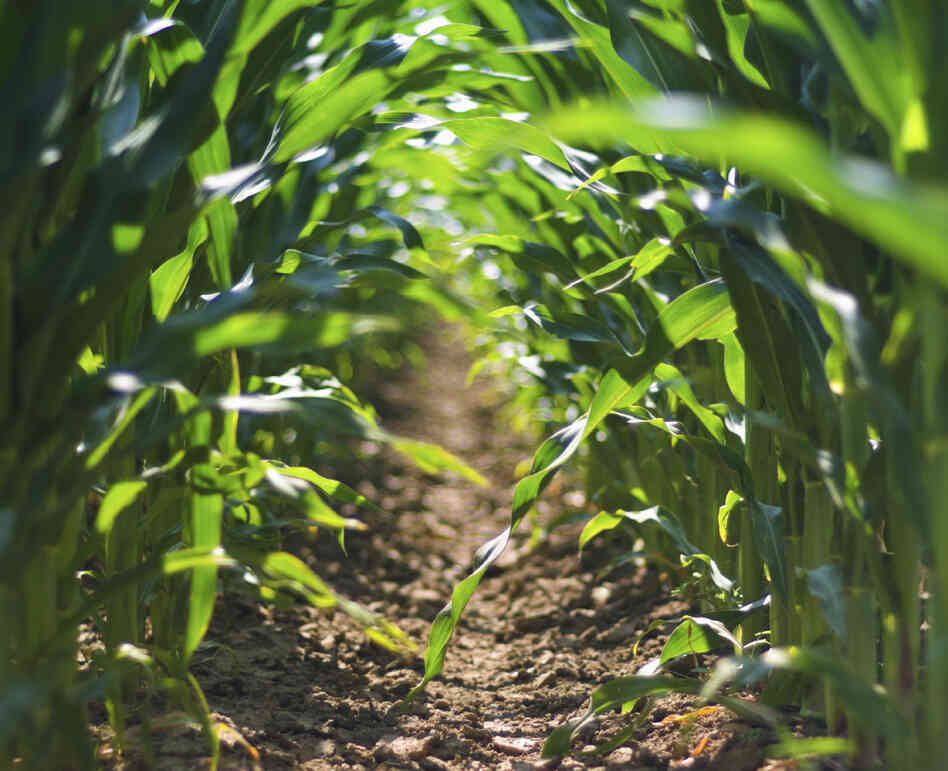
corn stover. Corn stover is basically the residue of a corn farmer harvest, meaning the leftover bits. It includes things like corn cobs, leaves, and husk; it is this matter is what companies, like POET intends to convert to fuel. A farmer would come in after harvesting the kernels and bale the stover, wait for it to dry to a certain level and then ship it off to a processing plant.

Process
The process of turning plant matter into fuel takes several steps. The first step is breaking down the complex molecule into simple sugars. This step is called hydrolysis, where enzymes make this break down
happen. After hydrolysis we are left with sugar and some remaining matter that then have to be separated. The sugar portion then has to fermented and distilled to produce alcohol that can be further concentrated to almost pure ethanol. This process is in contrast to the traditional production of corn ethanol because corn already consists of simple sugars and so hydrolysis (the breakdown of molecules) is not necessary.


Advantages
The advantages of using cellulosic ethanol over corn ethanol have a lot to do with the process behind it. Both approaches return the same product, ethanol which is great but there are some environmental and economic advantages to the use of cellulosic. First it has been said that corn ethanol can reduce green house gas emission by 13% where cellulose ethanol is a net 88% reduction in comparison to traditional fossil fuels. Economically speaking, the building of cellulose ethanol plants and the hiring of management etc. would add quite a few jobs and it looks pretty good for the corn farmers in the area too. Because this process uses a crop farmers waste, the proprietor is essentially make money off of their garbage. Not a bad gig, not to mention that the corn on corn acres used to produce corn stover can increase yield and can result in darker soil leading to faster germination of plants. Lastly there is the hope that this ethanol could reduce Americans dependence on foreign oil.

Disadvantages
Unfortunately they are some disadvantage to our cellulosic ethanol dream. The first is merely that the
technology is so there are very few commercial production plants and it is fairly costly to build a new facility.
Because of this cost and the fact that there is a cheaper alternative (gasoline) most cellulose ethanol projects
need to be government incentivized and without much private funding projects could fall though. Also, the ethanol produced has a reduce MPG meaning more trips to the gas station. Ethanol also absorbs water which means its shelf life is shorter that traditional fuel and transport is more difficult. Lastly the cost of enzymes needed to break down the cellulose can be costly.

In conclusion I believe that cellulosic ethanol has its advantages and disadvantages just like any other fuel in the world. I am not going to sit here and tell you that it is the solution to our fuel and environmental problems, but I do believe that it is a step in the right direction. At the very least I think it is pretty incredible that this technology can turn waste into energy.


Sources: http://greenthefuture.com/CELLETHANOL_PROSCONS.html; http://poetdsm.com/biomass; 

Tuesday, November 5, 2013

The Unknown Innovator.

When I tell people what I want to be when I grow up approximately 87% of them get this very specific look on their face. It is a look of bewilderment masked with a false nod of understanding, and if they don’t have this look it’s because there are my fellow students or the faculty that face the same bewildered expression when they tell people what they are. This profession that is so unknown to the general population (at least in the United States) is entitled Bio-systems engineering. Never heard of it? Like I said I’m not surprised. But without the work of a bio-systems engineer our lives would be very different, and hope for the future? A little less bright.

A good question to ask might be how a profession so important could go unnoticed. The answer would be because they work where not a lot of people pay attention. Have you ever wondered how the wheat in a field is turned into the pasta you buy? How gasoline is taken from the raw form that the wells in North Dakota unleash to the liquid you pump into your car? Have you ever considered how the water you get from your tap came to be? Any ideas on what powers your power company? All of these systems fall in the realm of work a bio-systems engineer takes under its wing.

Bio-system engineers deal with the design, management, and improvement of any system related to biology. For example, food processing systems are a specialty of a bio-systems engineers. Taking the beets grown and harvested from farmers and turn it into the sugar that might sit on your table is not a simple feat, especially at large quantities, and the system used by these sugar companies may have been designed  and improved on by a bio-systems engineer. These engineers may also find their passion in the energy arena. Some might put their extensive education into improving methods of turning crude oil into gasoline or the use of clean coal and nuclear power to bring energy to your homes. Others may take the noble route and do extensive research on alternative energy, the use of switch grass or algae for a renewable energy source. Environment and agriculture is another area the bio-system engineer finds interest. They are concerned with the conservation of soil and water, reducing runoff, and irrigating a farmer’s crop so they can feed the world.


Bio-system engineers share a couple of very solid values. We believe in the power of problem solving and the importance of common sense. Things all engineers value because it allows us to do our job, but bio-system engineers value something more than that, a higher calling if you will, they want to make a difference. We are concerned with the environment and its future so we might delve ourselves into the search for alternative energy or conservation. We don’t believe in wastefulness so we constantly improve systems to conserve energy, time, and resources. Untimely choosing to be a biosystems engineering is not an easy decision, you don’t get as much recognition as a mechanical, civil, electrical, or really any other engineering discipline but the reward is knowing that your work is helping to improve the world and make a difference to people.